
Wall Molding & Wallpaper: A Love Story
Wallpaper and wall molding are one of our favorite combinations. Together, they create depth, structure, and moments of interest that plain walls just can’t achieve.
Wall molding is a decorative trim applied to walls to create visual sections or frames. It helps guide the eye, highlight architectural features, and give wallpaper a more intentional place to live within a space. Instead of wallpaper feeling overwhelming, molding helps it feel curated.
There are many different molding styles, from traditional picture frame molding to more modern grid layouts, panel molding, board and batten, and applied trim details. Each style creates a slightly different feeling and works especially well with certain types of wallpaper patterns.
In this post, we’ll walk through several common molding styles and share ideas for the types of wallpaper that tend to pair well with each one. We’ll also explain the difference between chair rails and wainscoting, since those terms are often used interchangeably but actually refer to different things.
That said, there are no strict rules here. Some of the most beautiful spaces come from mixing styles in unexpected ways. Wallpaper is art, and molding is the frame. The combination can be as subtle or as expressive as you want it to be.
Chair Railings
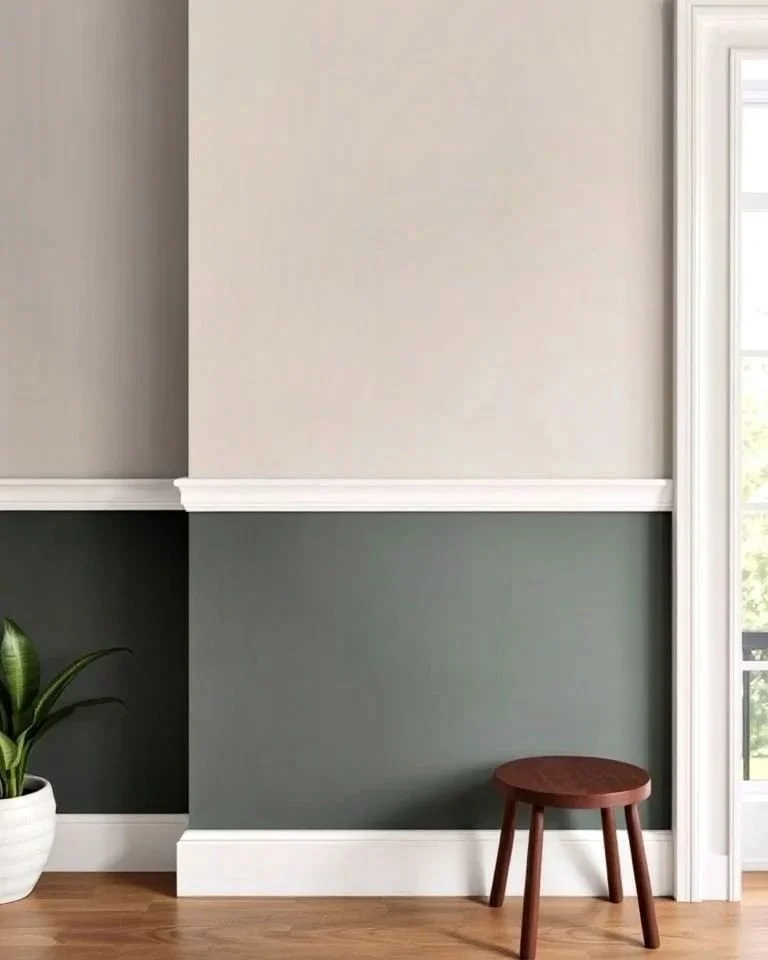
A chair rail is a horizontal piece of trim that runs around the perimeter of a room, typically installed about 30–36 inches from the floor. It can be very simple or more decorative, depending on the style of the home. Some chair rails are minimal and modern, while others have more traditional detail.
Originally, chair rails were functional. They were installed at the height where the backs of dining chairs would hit the wall, protecting plaster from dents and scuffs. Over time, they became more of a decorative architectural feature, used to visually break up a wall and add dimension to a space.
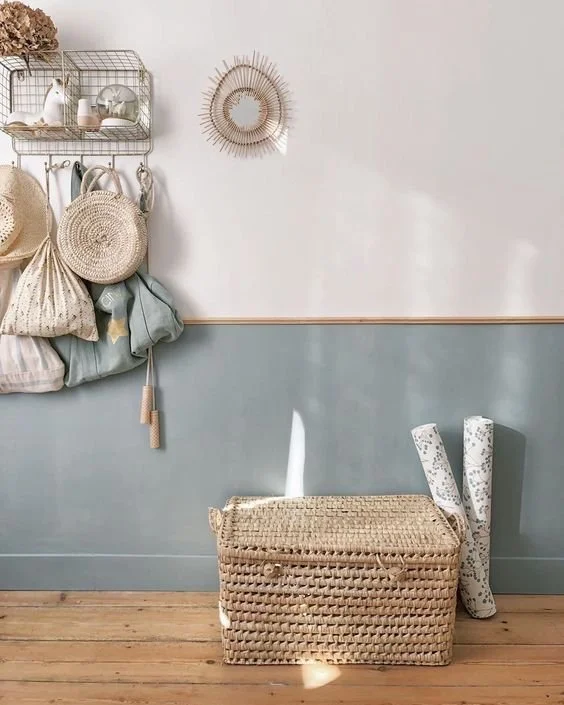
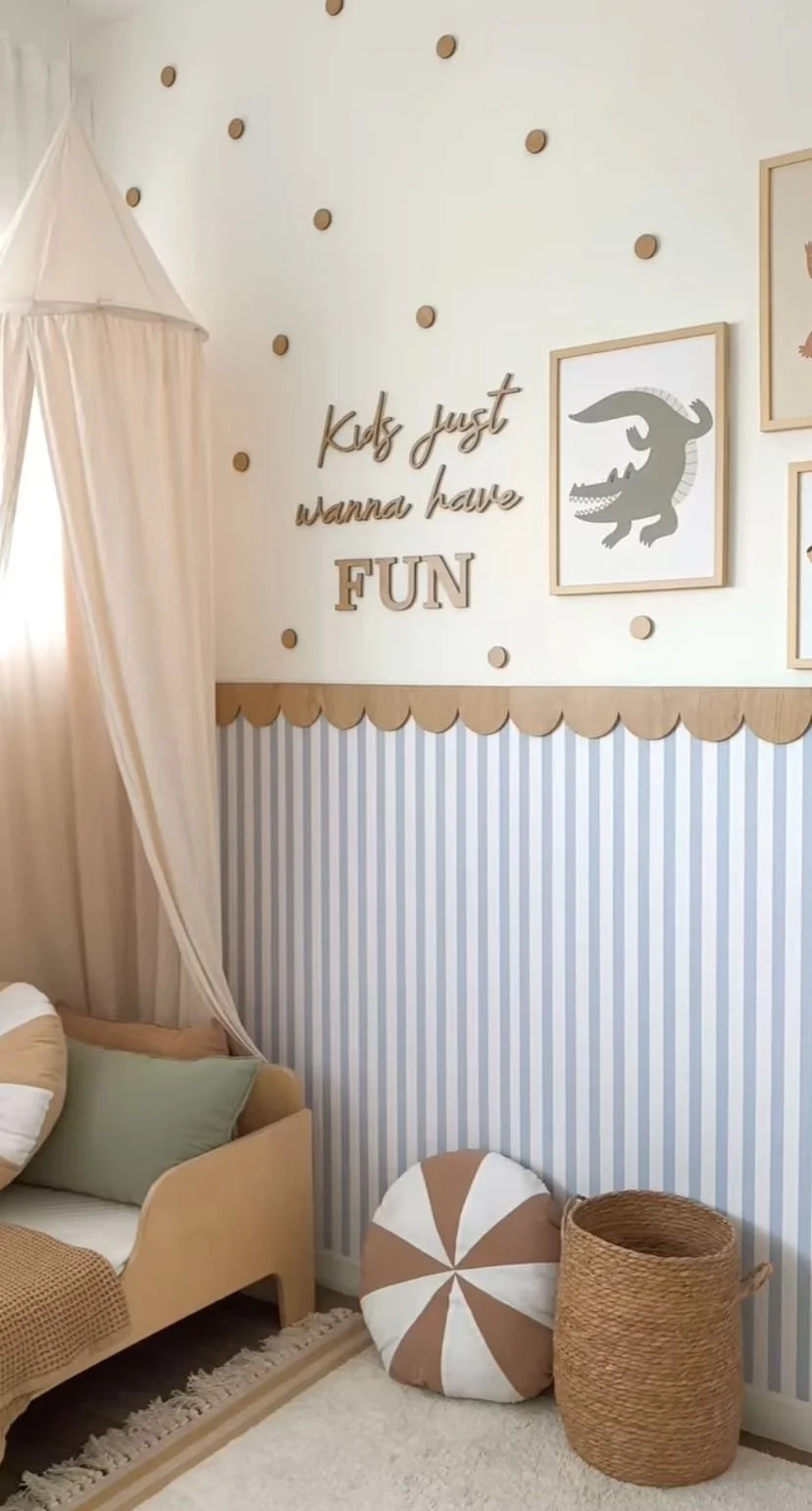
Today, a chair rail can stand on its own as a clean way to divide a wall into upper and lower sections. This allows you to combine different paint colors, textures, or wallpaper placements in a way that feels intentional and balanced.
Chair rails are also commonly used as the top boundary for wainscoting. In this case, the chair rail sits above paneling, board and batten, beadboard, or other trim work installed on the lower portion of the wall. The result creates structure and gives wallpaper or paint above it a framed, finished look.
Whether used alone or paired with wainscoting, chair rails offer a simple way to add architectural interest and help wallpaper feel more integrated into the overall design of the room.
Almost any wallpaper pairs nicely with a chair rail. It’s one of the most flexible and approachable ways to incorporate wallpaper into a space.
Sometimes wallpaper is used only above the chair rail, creating a clean visual line with a coordinating paint color below. Other times, the wallpaper can be applied below the chair rail with paint above, which often feels a bit more subtle while still adding interest. You can also run wallpaper both above and below the rail for a more immersive look, especially when you want the pattern to feel more continuous.
Using paint alongside wallpaper allows for a bit of visual separation and gives the eye a place to rest. Pulling a color directly from the wallpaper helps everything feel cohesive without looking overly matched.
Overall, a chair rail is a simple, safe, and beautiful choice. It adds structure to the wall, makes wallpaper feel intentional, and works with nearly any design style.
Wainscotting
Next is wainscoting. Wainscoting refers to the decorative paneling installed on the lower portion of the wall, typically below a chair rail. It adds depth, structure, and architectural interest, while still feeling warm and approachable. It’s one of the easiest ways to make a room feel more finished and intentional.
There are many different styles of wainscoting, and each creates a slightly different look:
Raised panel is more traditional and formal, often found in dining rooms or classic homes.
Flat panel (or shaker style) feels a bit cleaner and more transitional, working well in both modern and traditional spaces.
Board and batten creates a vertical rhythm and can feel casual, tailored, or modern depending on spacing and proportions.
Beadboard introduces subtle texture with narrow vertical grooves, often used in bathrooms, mudrooms, or cottage-style homes.
Picture frame molding adds applied trim in geometric shapes, giving a more custom and decorative feel.
Wainscoting can be painted the same color as the wall for a soft layered look, or painted in contrast to highlight the panel detail. It also pairs beautifully with wallpaper above, helping bold patterns feel grounded and balanced.
Functionally, wainscoting still offers protection for the wall from everyday wear, especially in high-traffic areas like hallways, dining rooms, and kids’ spaces.
Overall, wainscoting brings a sense of craftsmanship to a room. It adds dimension without overwhelming the space and creates a natural framework for wallpaper to stand out.
Raised Panel Wainscotting
Raised panel wainscoting features panels with beveled edges that create depth and shadow. This style leans more traditional and formal, but when painted in softer or modern colors, it can still feel approachable and current. It pairs beautifully with wallpaper above because the structure of the paneling helps ground the pattern.
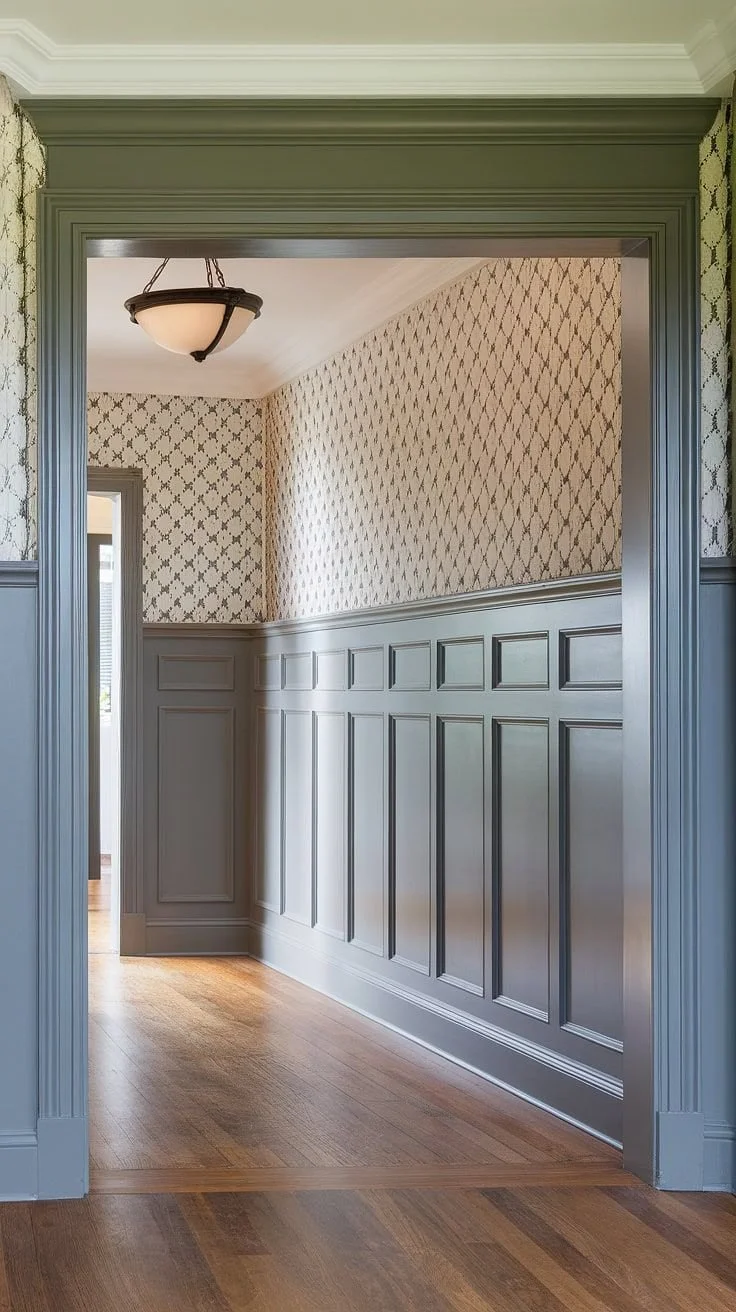
Raised Panel Wainscotting. Photo credit Doowrt
Here are wallpaper styles that tend to pair especially well:
Traditional motifs
Damasks, florals, botanicals, and heritage prints feel very natural with raised panel molding. The classic structure of the paneling supports these patterns without feeling overly formal.
Small to medium scale repeats
Patterns with a tighter repeat help maintain visual harmony with the rectangular rhythm of the panels. Think subtle florals, block prints, or small geometrics.
Textured or dimensional wallpapers
Grasscloth, linen textures, or subtle embossed patterns look beautiful above raised panel because they add warmth without competing with the architectural detail.
Soft geometrics
Simple lattice, trellis, or understated geometric patterns work well when you want something tailored but still interesting.
Tone-on-tone or low contrast patterns
If the paneling has strong presence, a quieter wallpaper keeps the room feeling calm and layered rather than busy.
Slightly more modern prints (for contrast)
Raised panel can actually balance more contemporary wallpaper styles like abstract florals or simplified scenic patterns. The traditional base keeps the space from feeling too trendy.
A helpful rule: the more detailed the panel molding, the more intentional the wallpaper should feel. It doesn’t have to be traditional, but it should feel considered.
This combination works especially well in:
• dining rooms
• entryways
• hallways
• powder bathrooms
• bedrooms
It’s a classic pairing that still leaves plenty of room to make the space feel personal.
Flat panel (or shaker style) Wainscotting
Shaker style wainscoting (flat panel) has clean lines and a simpler profile than raised panel, which makes it very versatile. The wall is divided into framed rectangles, creating a grid pattern. The trim pieces form complete boxes, which is the defining feature of shaker paneling. It feels structured but more relaxed and modern. Because the panel detail is subtle, it gives you more flexibility with wallpaper choice.
Here are wallpaper styles that pair especially well with shaker style wainscoting:
Medium to large scale patterns
Since shaker panels are visually quiet, they can support wallpaper with a bit more movement or scale. Florals, botanicals, scenic prints, or abstract patterns all work nicely.
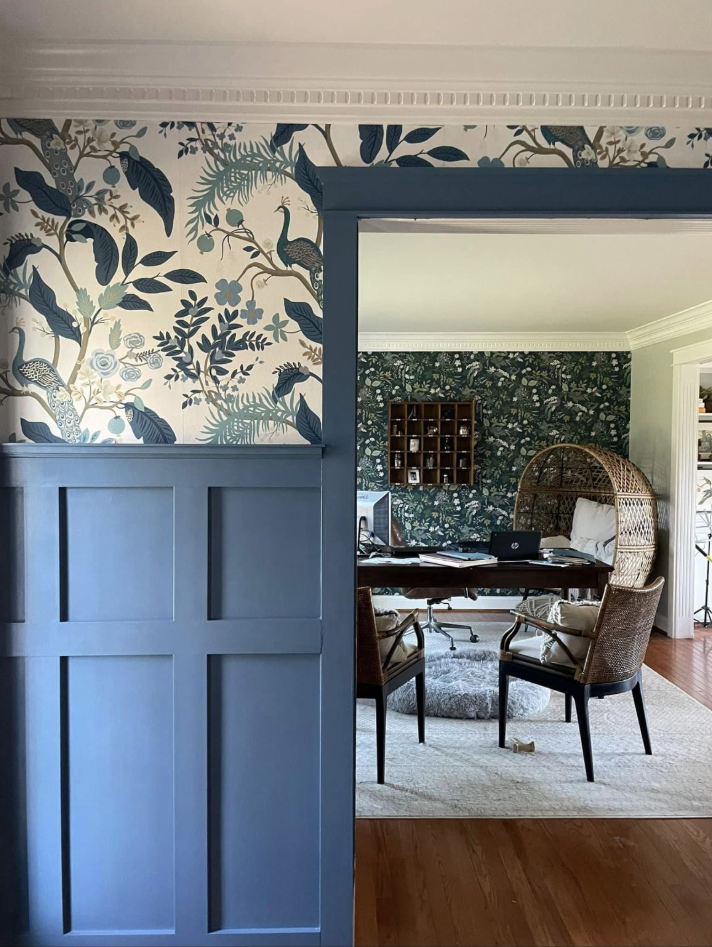
Flat Panel (or shaker style) wainscotting. Photo credit: Emily Allen
Modern florals and botanicals
Loose florals, leafy patterns, or nature-inspired prints feel balanced with the simplicity of shaker paneling. The clean lines help keep organic patterns from feeling overly busy.
Geometric patterns
Stripes, grids, lattice, or repeating geometric designs pair naturally with the tailored feel of shaker trim.
Abstract or painterly patterns
Because shaker style feels understated, it can nicely support more artistic wallpaper choices like watercolor effects, clouds, brushstroke patterns, or soft scenic murals.
Subtle texture
Grasscloth, linen textures, or lightly textured vinyl can create a calm layered look without competing with the panel detail.
Higher contrast color palettes
Shaker style can handle a bit more contrast between wallpaper and panel color. Dark paint below with lighter wallpaper above often looks especially sharp.
A helpful rule: shaker paneling acts as a quiet foundation, so the wallpaper can take on a slightly stronger role in the room.
This combination works especially well in:
• entryways
• living rooms
• bedrooms
• nurseries
• dining spaces
• home offices
It’s a great option when you want architectural interest without the formality of raised panel, and it gives you more freedom to explore both classic and modern wallpaper styles.
Board and Batten Wainscotting
Board and batten is a style of wall molding made up of vertical boards (or trim pieces) spaced evenly across the wall. The thin strips, called battens, create a repeating vertical pattern that adds rhythm and height to a space.
Originally, board and batten was used on the exterior of homes as a practical way to cover seams between wide wood boards. Over time, the look moved indoors and became a popular way to add architectural detail without feeling overly formal.
Board and batten typically sits below a chair rail or cap trim, though it can also extend higher on the wall depending on the design. The vertical lines naturally draw the eye upward, which can make ceilings feel taller and rooms feel more spacious.
Compared to raised panel or shaker paneling, board and batten often feels:
• slightly more casual
• tailored but relaxed
• modern farmhouse or transitional
• clean but still warm
• simple but impactful
Spacing between battens can change the overall feel. Narrow spacing feels more traditional, while wider spacing feels more modern. Unlike shaker panels, which emphasize framed rectangles, board and batten draws the eye upward and adds height to a space. It tends to feel slightly more casual and architectural, while still giving the wall structure and interest.
Wallpaper pairings that work especially well:
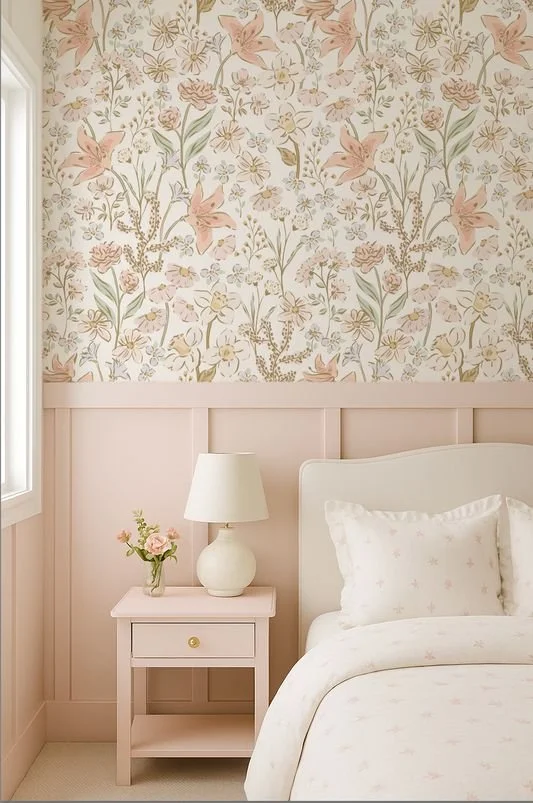
Board and Batten Wainscotting. Photo credit: Indy Bloom
Botanicals and florals
Organic patterns soften the linear structure of the vertical battens and create a balanced look.
Stripes or subtle geometrics
Patterns that echo the vertical movement of the paneling can feel very cohesive.
Scenic or mural-style papers
Board and batten helps ground more expressive wallpaper choices, especially in bedrooms, nurseries, or dining spaces.
Small to medium scale repeats
Repeating patterns help keep the wall feeling cohesive above the structured paneling.
Soft textures
Grasscloth, linen-look vinyl, or subtle texture adds warmth without competing with the trim detail.
Board and batten works especially well in:
• bedrooms
• nurseries
• bathrooms
• mudrooms
• hallways
• dining rooms
It’s a great choice when you want architectural interest that feels approachable and not overly formal. It pairs easily with many wallpaper styles and gives the room a sense of structure without feeling heavy.
Bead Board Wainscotting
Beadboard is a style of wall paneling made up of narrow vertical grooves, often called “beads,” that run evenly across the surface. The small ridges create subtle texture and give the wall a softer, more casual feel than other molding styles.
Historically, beadboard was used as a durable wall covering to protect surfaces from everyday wear, especially in hardworking spaces like kitchens, mudrooms, and bathrooms. Today, it’s often used for its charm and warmth as much as for its practicality.
Beadboard is typically installed on the lower portion of the wall, often below a chair rail, but it can also be installed floor to ceiling for a more immersive look. Because the grooves are closely spaced, the overall effect feels gentle and understated rather than bold or architectural.
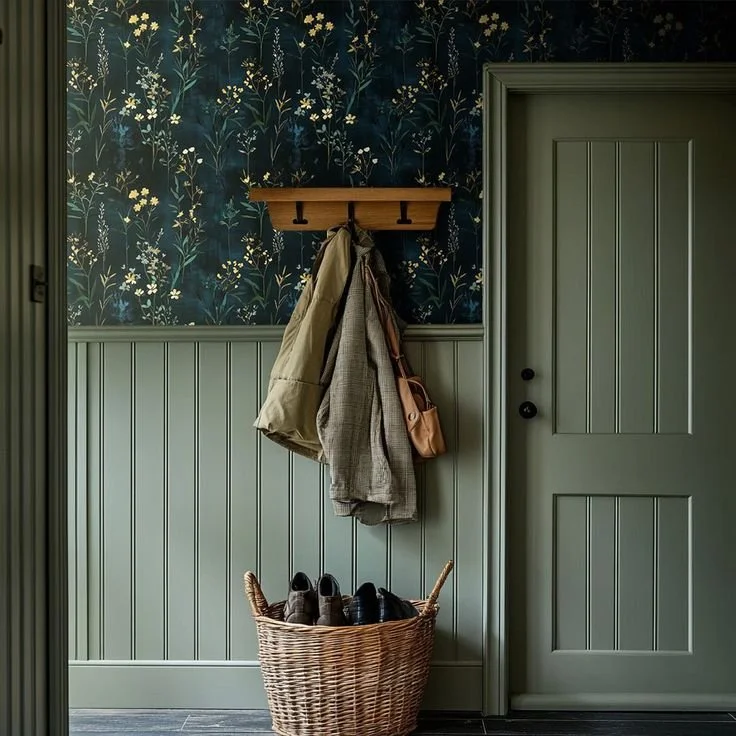
Bead board wainscotting. Photo credit: Painted Paper
Compared to other panel styles, beadboard tends to feel:
• relaxed
• cottage-inspired
• coastal
• traditional but informal
• warm and inviting
• subtly textured
Beadboard pairs beautifully with wallpaper because the texture adds interest without competing with pattern. The vertical lines are very fine, so wallpaper can take center stage while the paneling still adds dimension to the room. Wallpaper pairings that work especially well:
Florals and small botanicals
Soft, organic patterns complement the relaxed feel of beadboard and help create a welcoming atmosphere.
Stripes and simple repeats
Classic patterns feel timeless when paired with the subtle texture of beadboard.
Vintage or heritage prints
Beadboard has a long history, so traditional motifs often feel very natural with it.
Playful or lighthearted patterns
Because beadboard feels approachable, it works well in spaces where you want personality without feeling overly formal.
Beadboard works especially well in:
• bathrooms
• mudrooms
• laundry rooms
• kitchens
• kids rooms
• coastal spaces
• casual dining areas
It’s a great choice when you want architectural detail that feels classic, comfortable, and easy to live with.
Picture Frame Wainscotting
Picture frame wainscoting is created using applied molding that forms decorative rectangular shapes directly on the wall. Instead of using full panels or vertical boards, trim pieces are installed to create frames, similar to how artwork is framed. The result is elegant, structured, and highly customizable.
This style has roots in traditional European interiors, where decorative millwork was used to add refinement and architectural detail to otherwise simple plaster walls. Today, picture frame molding is used in both traditional and modern homes because the spacing, proportions, and scale can all be adjusted to suit the space.
Picture frame molding is typically installed on the lower portion of the wall, often below a chair rail, but it can also be applied to full walls, stairways, hallways, or even ceilings. The boxes can be uniform for a classic look, or varied in size for something more contemporary.
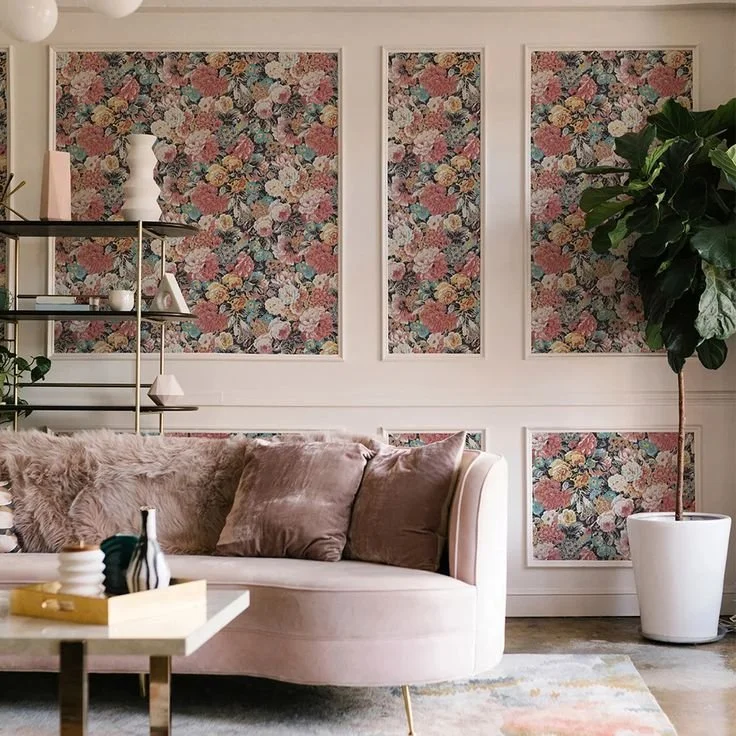
Picture Frame Wainscotting. Photo cred: Wallpaper Direct
Compared to other panel styles, picture frame molding tends to feel:
• elegant
• tailored
• architectural
• customizable
• classic but adaptable
• refined without feeling overly heavy
Because the molding creates clear visual structure, wallpaper pairs beautifully above it. The frames help ground the pattern and prevent the wall from feeling too busy, especially when using medium or large scale designs.
Wallpaper pairings that work especially well.
Florals and botanicals
Traditional and modern florals both work well, as the molding provides structure that balances organic movement.
Damasks and heritage prints
These classic patterns feel very natural with the formal influence of picture frame molding.
Stripes or subtle geometrics
Structured patterns complement the clean lines of the frames.
Scenic or mural style wallpaper
The molding helps organize larger visual patterns so the room still feels cohesive.
Grasscloth or textured wallpaper
Texture paired with the architectural detail creates a very layered, high-end look.
Picture frame wainscoting works especially well in:
• dining rooms
• entryways
• hallways
• bedrooms
• living rooms
• staircases
It’s a great option when you want a more decorative architectural feature that still feels timeless. The structure of the frames allows wallpaper to stand out while keeping the overall look polished and balanced.
Getting Wall Molding Installed
Whether you choose a chair rail, wainscoting, or a mix of different molding styles, these architectural details pair beautifully with wallpaper. They help break up wall space, add structure, and create natural places for pattern to live in a way that feels thoughtful rather than overwhelming.
Many of these molding styles are relatively straightforward to install and can easily be incorporated into the design process. When we meet, we can talk through what makes the most sense for your space, your style, and how bold or subtle you want the finished look to feel.
Wall molding gives wallpaper a framework. It allows you to introduce color, pattern, and texture while still keeping the room feeling balanced and intentional. It can make a bold wallpaper feel more approachable, or help a subtle wallpaper feel more elevated.
The best part is that there are no strict rules. Traditional styles can be paired with modern wallpaper, and simple trim can support more expressive patterns. The right combination depends on the feeling you want when you walk into the room.
Wallpaper is one of the most impactful ways to transform a space, and molding helps highlight it in a way that feels designed rather than decorated. Together, they create layers that make a room feel complete.
